Bundesliga Tactics Check | RasenBallSport Leipzig
Four Bundesliga matches into Martín Demichelis' tenure, RB Leipzig has already found a way to make predictions look both accurate and wrong. The team's new 4-3-3 formation showed promise in pre-season, but sustaining effectiveness for 90 minutes remains a question. Leipzig has dominated at home, winning their first two league games with an 8-0 aggregate score. However, away from the Red Bull Arena, they've struggled, suffering losses in Bremen, against Como in the Champions League, and in Leverkusen. While a humorous solution might be to play all games in Saxony, coach Demichelis faces the challenge of improving the team's away form and consistency.
RB Leipzig: Key Tactical Developments
Nusa's Ascendancy in Attack
Antonio Nusa has quickly become a pivotal attacking player for RB Leipzig, especially in Christoph Baumgartner's absence. His current form mirrors his 2024/25 campaign. Nusa excels at breaking down defenses when Leipzig's structured play falters, possessing the ability to single-handedly create opportunities. He scored on a breakaway against Gladbach, consistently threatened Como's defense in the Champions League opener, and was instrumental in the 5-0 win over Hamburg, earning Man of the Match for his involvement in three goals. This is significant as Leipzig has yet to consistently break down compact defensive setups. When central areas close off, the ball often moves wide, leading to crosses but not necessarily clear chances. Nusa provides a direct alternative: dribbling past opponents. This directness is something Demichelis clearly values.
Banzuzi: Demichelis' Midfield Chess Piece
Ezechiel Banzuzi's strong pre-season suggested a prominent role. However, his impact has been more dynamic. As Nicolas Seiwald returned, Banzuzi moved from deeper midfield duties to an aggressive attacking 'eight' role. This carried into the Bundesliga opener against Gladbach, where Banzuzi frequently abandoned conventional midfield positions to attack the box, sometimes appearing as a second striker. This role has been fluid. In Bremen, he played as an advanced midfielder. Against Como, he was part of an aggressive midfield setup, leaving El Aynaoui to anchor. He also pushed high and wide against Hamburg, contributing to Gomis' opening goal. In Leverkusen, Demichelis deployed Banzuzi in a more conventional double pivot alongside El Aynaoui in a 4-2-3-1, requiring more standard midfield work before being substituted. His versatility has seen him play as an advanced eight, a supporting ten, a box runner, an attacking midfielder, and a double-pivot player, making him a key, adaptable figure.
Nkunku and Romulo Still Finding Their Rhythm
Christopher Nkunku's return to Leipzig has generated anticipation. A dominant Bundesliga attacker before his 2023 departure, his reintegration has shown flashes of his former ability. He provided an assist against Gladbach, scored off the bench against HSV, and had a disallowed goal in Leverkusen from a well-worked Romulo cutback. Despite these moments, Nkunku has sometimes drifted through matches more than expected. His first start in Bremen did not solve issues against a deep block, and moving him to a number ten against Como had minimal impact. Romulo also faces challenges. He works hard defensively and offers a physical presence, his pressing creating a goal against Hamburg and his link-up play setting up Nkunku's disallowed goal. However, he hasn't yet looked fully sharp in front of goal, understandable after a knee issue. Leipzig currently has two potentially impactful attacking players still seeking peak form.
A Managerial Appointment Without the Appointer
An interesting political dynamic might emerge if Leipzig's inconsistent start continues. Martín Demichelis was reportedly a favored choice of Jürgen Klopp, who played a significant role in the decision to replace Ole Werner with Demichelis. However, Klopp's departure to the German national team removes his primary advocate from the RB hierarchy. While another coaching change so early in the season is unlikely, with Demichelis under contract until 2028 and managing a significantly rebuilt squad, his position becomes more precarious with his main supporter no longer in power.
Tactical Analysis: RB Leipzig's Early Season
Leipzig's pre-season ended with a 6-0 Pokal win, solidifying their 4-3-3 formation: Seiwald at defensive midfield, Banzuzi and Gruda ahead, with attacking fullbacks and dynamic eights. The focus shifted to applying this in the Bundesliga. For the opening match against Borussia Mönchengladbach, Demichelis made only one significant midfield change, with Reitz replacing Bakayoko and Gruda moving to right-wing. The team then delivered a performance that matched the pre-match choreography.
RB Leipzig (Match One vs. Gladbach): Gladbach started stronger, hitting the post. Leipzig's first chance came later, leading to Gomis' opener in the 26th minute after a Baku-Gomis combination. The game then shifted to Leipzig's advantage. Banzuzi pushed forward, Raum advanced, Nusa found space, and Gomis dropped to link play. Leipzig regained possession quickly, attacking before Gladbach could regroup. Nusa doubled the lead early in the second half. Reitz added a third after winning the ball and combining with Nkunku. The 3-0 victory, with 25 shots and nearly four expected goals, showcased the effectiveness of the 4-3-3: advanced eights exploiting space, wingers accelerating into open areas, and a counterpress generating continuous attacks.
The next fixture in Bremen presented a different challenge. Injuries forced changes, with Reitz and Gruda out, and Esteve, El Aynaoui, Bakayoko, and Nkunku coming in. The broad 4-3-3 structure remained.
RB Leipzig (Match Two vs. Bremen): Bremen scored early and then defended deeply. Leipzig dominated possession (75% after 17 minutes) but struggled to create meaningful chances beyond a disallowed penalty. Attacks became predictable, moving wide for crosses into a compact area. Nkunku had the only real first-half chance from a Baku cross. The second half followed the same pattern until Bremen doubled their lead from a corner. Nusa hit the bar during Leipzig's best spell, and Bremen added a third. Despite 71% possession and 19 shots, Leipzig's attacking output was underwhelming. The issue was clear: Leipzig thrived against disorganization (Gladbach) but faltered against organized, deep defenses (Bremen).
Demichelis experimented again five days later in Como, resulting in what the German press termed a "mini-crisis." He switched to an offensive 4-2-3-1, with El Aynaoui and Seiwald in a double pivot, Nkunku at ten, Maksimovic on the right, and Guiu leading the line. Off the ball, Leipzig pressed high in a 4-4-2 with Nkunku and Guiu leading.
RB Leipzig (UCL vs. Como): Como proved effective, breaking Leipzig's press with clean combinations and exploiting the spaces behind their advanced shape. Baku was caught out of position, and Diao attacked Raum. Baturina scored for Como after Baku's failed clearance. Nusa nearly equalized, and Maksimovic and Guiu missed chances before Como scored again. Leipzig improved after halftime, gaining territorial control and seeing more of Nkunku and Nusa. However, Como countered effectively for a third goal. Maksimovic pulled one back after a Nico Paz error. Demichelis responded with substitutions, bringing on Banzuzi, Ouédraogo, and Gomis for an aggressive 4-1-4-1. Gruda replaced Maksimovic. Nusa became the main threat, but Como defended resolutely. Maximo Perrone scored a fourth in the 90th minute.
The schedule offered a respite at home against Hamburger SV, who had recently suffered a heavy defeat. Demichelis returned to the 4-3-3, with Henrichs, Ouédraogo, Banzuzi, and Gomis in key roles.
RB Leipzig (Match Three vs. Hamburg): HSV started brightly, pressing Leipzig's build-up. However, Leipzig gradually took control. The opening goal exemplified Demichelis' vision: Gruda passed to Banzuzi, who accelerated past midfield and squared for Gomis. The second goal came from Nusa's press, winning the ball and driving towards goal; his shot deflected in off a desperate recovery challenge. Ouédraogo left with a shoulder injury after 35 minutes, replaced by Nkunku. Despite Hamburg creating second-half chances, Leipzig secured the win with three quick goals. Orban scored from a Nusa set-piece, Nusa assisted Nkunku, and Romulo capitalized on a defensive error. While Leipzig played well, the goals came from making a struggling opponent's day worse.
The true test came in Leverkusen. With Ouédraogo out and Lukeba unavailable, Gomis and Henrichs returned to the bench, making way for Baku, Esteve, Nkunku, and Romulo in a 4-2-3-1 formation, similar to the one used against Como.
RB Leipzig (Match Four vs. Leverkusen): The match started well. Leipzig was compact defensively, limiting Leverkusen's central access. Leverkusen had more possession but few clear chances, and Leipzig won most first-half duels. Gomis came on for the injured Gruda after 26 minutes. Leipzig looked the slightly better side and even scored through Nkunku, assisted by Romulo, but the goal was disallowed for offside. The defense faltered before halftime: Orban lost possession leading to a Schick chance, and Esteve was beaten by Gutiérrez's cross, with Schick scoring. After halftime, Maza found space through midfield unchallenged, leading to Leverkusen's second goal. Demichelis attempted to regain control by substituting Banzuzi for Seiwald and Romulo for Maksimovic, moving Gomis to striker. This change yielded little. Leverkusen defended compactly, and Leipzig struggled again. Defensively, Maza moved through midfield with ease, and Leverkusen found counterattacking opportunities as Leipzig's defensive shape collapsed. Demichelis took responsibility, noting the team's "two faces": aggressive and efficient at home, but lacking intense pressing away. David Raum added that the team needs character when things go wrong.
Upcoming Fixtures and Assessment
The upcoming international break provides a crucial period for recovery and development. Ouédraogo requires shoulder surgery, Gruda has an abdominal injury, while Baumgartner is nearing full fitness. Nkunku and Romulo could benefit from more training time. Demichelis also needs time to refine his strategy. The current evidence suggests his core tactical idea is sound: a 4-3-3 that thrives on turnovers, attacking eights, and wingers like Nusa or Gruda exploiting space. Problems arise when these conditions aren't met: deep blocks frustrate them, technically sound teams bypass their press, and individual defensive errors prove costly. Most concerningly, conceding first often leads to a team-wide collapse in confidence. The upcoming fixtures—Frankfurt at home, PSV Eindhoven at home, and an away match against Bayern Munich—will be critical tests. Demichelis has time to prepare for the Bayern game, a club where he had significant ties. Three losses could intensify pressure on the league's first Argentine coach, especially without Jürgen Klopp's backing within the RB structure.
Fresh materials — Bundesliga News

Luis Diaz Takes Break from International Duty for Bayern Munich
Bayern Munich winger Luis Diaz will skip Colombia's upcoming international matches. The player aims to regain the form that made him a top Bundesliga attacker last season. Coach Néstor Lorenzo agreed to the break, noting concerns about Diaz's fatigue, according to Kicker. Diaz will stay i
Jonas Urbig's Path to No. 1 for Club and Country Develops
Bayern Munich is building its future goalkeeping strategy around Jonas Urbig. While he currently serves as Manuel Neuer's backup, Bayern has strategically included Urbig in early-season matches. The former 1. FC Cologne keeper has played in two of Bayern's first six competitive games. This app
German Football's Fan Culture in the 'Age of the Influencer?'
For decades, German football supporters have voiced concerns about the sport's increasing commercialization. A new question now surfaces: what happens when supporters themselves become the product? The rise of influencers and content creators within German football stadiums is sparking signific
Jan-Moritz Lichte leaves next Borussia Mönchengladbach head coach with plenty to ponder
Borussia Mönchengladbach's recent loss did little to lift them from their disastrous start, leaving the club at the bottom of the Bundesliga. Interim trainer Jan-Moritz Lichte, however, managed to equip Eugen Polanski’s eventual permanent successor with more to consider than a one-match assign
Bundesliga Player Ratings: Stuttgart 0-1 Borussia Dortmund - Maximilian Beier Goal Secures Dortmund's Perfect Start
Borussia Dortmund aimed to keep their perfect season record intact with a challenging away match against Stuttgart. Stuttgart, meanwhile, has experienced a mixed season so far. The first half offered few clear-cut chances for either team. Dortmund controlled possession more and entered Stut
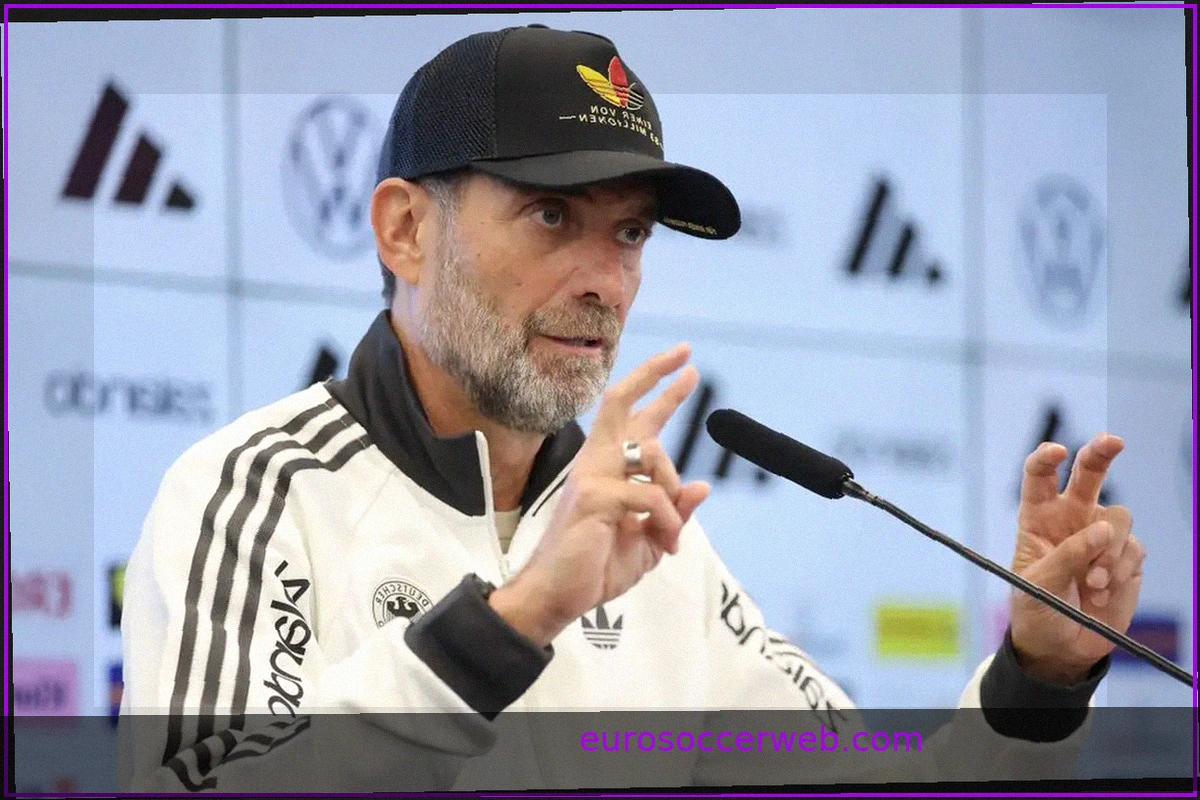
Jürgen Klopp on Germany's New Call-Ups: "We See Potential in These Players."
Jürgen Klopp urges a broader view when evaluating the many new faces in his initial German national team roster. The new head coach named 44 players across two groups for upcoming UEFA Nations League matches, including 11 who had never before received a senior national team call-up. Some c